

E-commerce and integrations
I audit, redesign and optimise online stores so products are easier to find, product pages answer questions and checkout has fewer obstacles. I work with Shopify, WooCommerce and other platforms and can connect payments, CRM or ERP, including the accessibility requirements relevant to the project.
E-commerce and integrations
The problem
People visit the store but abandon their cart, can't find the right filters or don't trust the checkout. Apps and plugins have piled up and the store is slow. Since 28 June 2025, the European Accessibility Act applies to e-commerce services across the EU (in Romania, through Law 232/2022), with an exemption for service-providing microenterprises.
The information about the law is general and does not constitute legal advice.
What you get
- a shorter path from product to payment;
- clearer product pages, filters and search;
- a faster, more accessible store;
- integrations that remove manual work between the store and your other systems.
How I work
Audit: analytics, heatmaps, the purchase journey, accessibility, speed.
Priorities: what brings the most, for the least effort.
Redesign on the existing platform or, if needed, a migration plan.
Implementation and integrations, tested before launch.
Measurement after launch.
Deliverables
- conversion and UX audit
- designs for product page, listing, cart and checkout
- platform and app recommendations
- integration specs
- accessibility check
Who it's for
Online stores covered by the European Accessibility Act; brands that have outgrown their first platform; stores selling across the EU.
From my projects
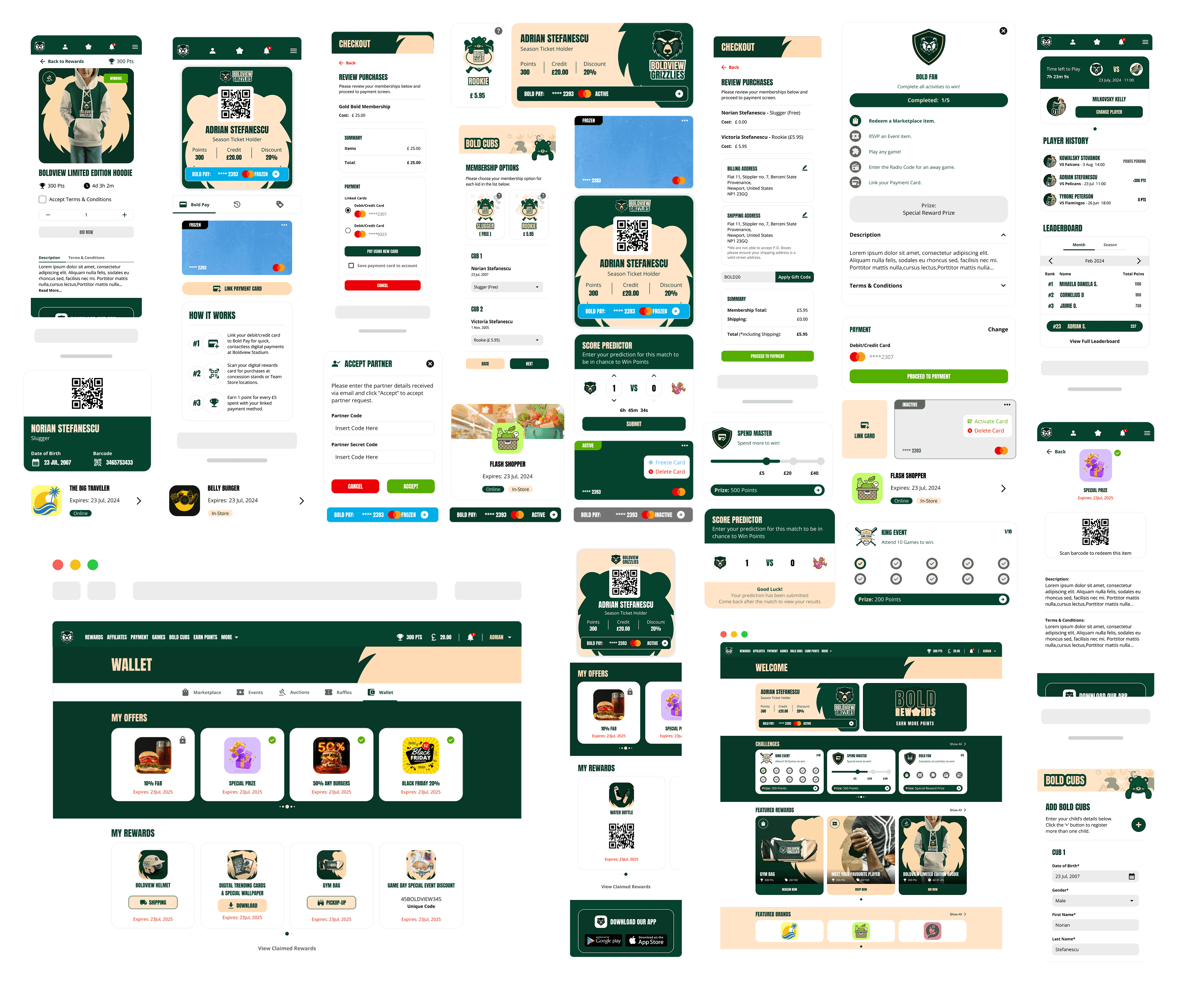
Bold Rewards: marketplace, linked-card payments, vouchers, memberships and a product wallet.
Frequently asked questions
Can I improve my online store without changing platform?
Most of the time, yes: product pages, filters, cart, checkout, speed and accessibility can be improved on the existing platform. Migration is recommended only when the platform blocks growth or integrations.
Shopify or WooCommerce?
Shopify is a hosted platform with little technical maintenance and a monthly subscription; WooCommerce runs on WordPress and offers more control but needs more upkeep. The choice depends on catalogue size, local integrations (payments, shipping, invoicing) and who runs the store.
What should be optimised first in an online store?
I start with the obstacles that directly affect purchase: product discovery, product information, trust, the basket and checkout. Analytics, internal searches and abandonment data show what deserves priority before a complete redesign.
Can you integrate payments, shipping, invoicing, CRM or ERP?
Yes. I first document the data and steps that need to stay in sync, then verify the platforms' APIs and limitations. The integration is designed so orders and errors can be tracked without copying information manually between systems.